Showing posts with label reader response. Show all posts

Thursday, November 19, 2009

reader response: chapter 6 media & life


Last week I went off an older copy of our syllabus and as a result, I read the wrong chapter in our text. That being said, I did read chapter 6, and learned a number of things about media in general, the idea and origins of "mass media", and convergence of media forms with the advent of each new technology in the 20th-21st centuries. These, then, are my reflections on chapter 6.

The more technology grows and advances, the more exposure we have to media. This can be both a good thing, and a bad thing. Today's society has a more interactive experience with visual media which involves complex interconnecting networks. A shift has happened from mass-media consumers to niche markets, also known as contemporary media.


The "masse
s" was the term created in the late-19th century which refers to the structures of society during the industrial revolution, the emergence of the working class, and how that influenced social practices. The term, Mass Media was first used in the post-WWII era. The masses can be taken as a negative connotation equating to a passive audience of non-individualized, uncritical consumers. What was/is considered as mass society reaches into both private and public realms. Large companies with corporate boards versus small, locally owned businesses resulting in less personalized service. Urbanization versus rural towns contributing to population crowding, lack of personalization, alienation, assembly-line work, and boring, repetitive, often physical ("blue collar") type jobs.


The idea of mass
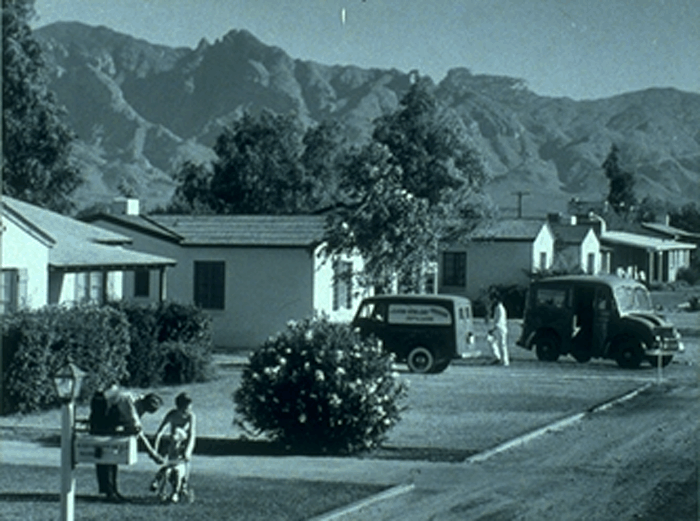
society can also be thought of as a contribution to the erosion of family life. Again, this started around the era of industrial expansion due to the migration of families from rural areas into the cities. Their pursuit was for better housing, the promise of steady work, and access to modern goods, services and entertainment. Starting in the 1950s, and continuing today, what we know as the American Suburb, can be linked to a social alienation via "cheap" entertainment--films, TV, consumerism, and modernity are all used as replacements for connectivity with other people.


Mass media in the 1920s consisted of regularly scheduled programming, from a one-way (bias) broadcast model, at a central distribution source (newspaper, radio), which fostered a less critical audience. Mass media in the 1980s up to the present decade has increased our options for information with the invention and expansions of TV, cable TV, film, mobile devices, cell phones, Internet and satellite broadcasting. Along with these expansions has come more specific media catering to interests, tastes, and language groups. In addition, today's consumer is not just interacting but also producing much of the media in mainstream, everyday life.


While seeking images to include with this post, I discovered an interesting post on this blog. The author, Anne Helen Peterson of the University of Texas, makes some great observations about the modern equivalent of Mass Society--what she calls the "Minivan Majority".

It’s hard to define the minivan majority in a sentence, so I’ll start with some descriptors. Not all of these are necessary true of everyone in the minivan majority — and if some of them describe you, that does not necessarily mean you’re in the minivan majority (and I want to make it clear that I don’t dislike or disdain the minivan majority — but it’s important to know the identity of those quietly driving taste and entertainment in the country.)

Some traits of the minivan majority:

  • You probably live in a non-urban space — either suburban or rural, but most likely suburban.
  • You are probably white.
  • You have no radical convictions. You are neither an arch conservative nor strong liberal. In other words, you are probably a self-described ‘moderate.’
  • You love pictures of babies. Especially celebrity babies.
  • You believe things that appear in print in the gossip magazines.
  • You are not overtly racist, sexist, or homophobic, but you might subconsciously discriminate against people who are different than you or the people that you know and see on an everyday basis.
  • You don’t like things that are too much: too gross, too sexual, too outrageously expensive.
  • You might own something from Ikea. You definitely own things from Target or Wal-Mart.
  • You style is a combination of Gap, Banana Republic, Ann Taylor Loft, Talbots, Coldwater Creek [and I'm adding Old Navy, Eddie Bauer, and if a Pacific NW dweller, Columbia Sportswear].
  • You are a parent.
  • You probably battle your weight, even if it’s just those pesky ten pounds.
  • You may own a minivan — or if not, a similar SUV type vehicle.
  • You believe that people of any race, color, creed or background can make something of themselves with hard work.
  • You believe in a higher power — most likely God — even if you don’t necessarily go to church every week [you are likely to make an appearance at Christmas and Easter].
  • You are not generally an early adopter — of a technology, a political candidate, a new fad, etc.
  • You enjoy the reliability of moderately price, moderate quality chain restaurants, [hotels, cars, appliances, housewares, clothing] and all-inclusive vacations.
  • You have a subscription to Cooking Light and/or may contribute recipes regularly to allrecipes.com

Swing

Good clean fun in Gap khakis.

Now, some media products favored by the minivan majority:

  • Jennifer Aniston
  • Julia Roberts
  • Tom Cruise
  • Michelle Obama
  • Celebrities who hit their career pinnacle about 10-15 years ago
  • National Treasure (and other Nicholas Cage movies)
  • Marley and Me
  • Reese Witherspoon
  • Jennifer Garner
  • Michael Buble/Josh Groban
  • Norah Jones
  • Dave Matthews Band
  • Two and a Half Men
  • Desperate Housewives
  • [Ghost Whisperer, Medium, Heroes]
  • Sex and the City (latecomers — started watching Season 3 or later)
  • Network television in general
  • Jay Leno
  • Martha Stewart and/or Rachel Ray
  • Oprah, Oprah, Oprah. Oprah’s Bookclub, Oprah’s magazine, things recommended by Oprah.
  • Entertainment Tonight, [annual music/film/TV celebrity award shows/ceremonies]
  • People especially, maybe Us magazines.
  • Nicholas Sparks novels and film adaptations
  • American Idol, Dancing with the Stars, The Bachelor/Bachelorette -- [Project Runway, America's Next Top Model, The Amazing Race, SURVIVOR, Big Brother, CSI, The Biggest Loser, Wife Swap, Extreme Makeover--any edition.]
[ ] = my additions.
Share/Bookmark

Sunday, November 1, 2009

reader response: perspective


Ah, perspective. Most likely the key to art as we know it. Also the always-required-but-ever-dreaded lesson of introductory art courses. Perspective is the technique in art that forces the right brain to wrestle with the left. For art-minded folk that's usually a challenge. Understanding how perspective works (or doesn't) allows all the other techniques to fall into place. Last weeks reading covered much of the basic history of perspective, and provided some good examples of how it works when it's utilized well.


For my response this week I searched for images that I feel make fine use of perspective. Some are favorites from my studies in art history, some I just found while searching for this post.

Enjoy!


Images t 2 b:
School of Athens - Raphael Santi (painting)
Old Shanghai - Photopia (fine art photo)
Untitled - Paul Heaston (watercolor sketch)
Kitchen Servant - Jan Vermeer (painting)
Loop Walk - Brian Bleakley (painting)
I Still See You - My November (fine art photo)
The Last Supper - Leonardo Da Vinci (painting)
Path to the Gothic Choir - Raphael Locoste (digital painting)

Share/Bookmark

Wednesday, October 7, 2009

reader response: chapter 2 (pg 69-89)


bri⋅co⋅lage   /ˌbrikəˈlɑʒ, ˌbrɪkə-/[bree-kuh-lahzh, brik-uh-] –noun, plural bri⋅co⋅la⋅ges /ˌbrikəˈlɑʒɪz, ‑ˈlɑʒ/ Show Spelled Pronunciation [bree-kuh-lah-zhiz, ‑lahzh]
1. a construction made of whatever materials are at hand; something created from a variety of available things.
2. (in literature) a piece created from diverse resources. 3. (in art) a piece of makeshift handiwork. 4. the use of multiple, diverse research methods.
The part of our reading this week that stuck with me the most was the section on bricolage. Partly because I am a collage artist, a bit because I remember the punk styles during the 1980s, and mostly because I admire the creativity and innovative quality of what our text refers to as, "the art of making do".

I decided to Google the word bricolage and see what I could find. This post contains images and explanations of a variety of associations with the word, idea and practice of bricolage. So
me touch closer than others to the definition as it pertains to our study.

Culture

In cultural studies bricolage is used to mean the processes by which people acquire objects from across social divisions to create new cultural identities. In particular, it is a feature of subcultures such as, for example, the punk movement. Here, objects that possess one meaning (or no meaning) in the dominant culture are acquired and given a new, often subversive meaning. For example, the safety pin became a form of decoration in punk culture.


Fashion

The fashion industry uses bricolage-like styles by incorporating items typically utilized for other purposes. For example, candy wrappers are woven together to produce a purse.

The movie Zoolander parodies this concept with Mugatu's Derelicte, a line of "high fashion" clothing made entirely from trash.

In reality, the current fall 2009 collection from Alexander McQueen makes use of items we would normally discard or recycle, including saran and bubble wrap, manhole covers, garbage bags and wheel hub covers.

Television

MacGyver was a tv series in which the hero is the ultimate example of a bricoleur, creating solutions for the problem at hand out of immediately available found objects.

The A-Team is another example of bricoleur. When the team found themselves in a situation which required creativity for defense or escape, they put together weapons out of any objects available.

Life itself is a bricolage of bricolages, meaning you never know what you are going to get the next day. A reminder of the quote about the box of chocolates made famous in the movie, Forrest Gump. We tend to use whatever resources are available to us in order to survive, which essentially defines the idea of bricolage.

Household Items

A paperclip is a common office item. Used to hold papers together, it can also be turned into a sculpture, a tool for carving/etching into things or even an elaborate light fixture.

Cooking and Food

Cooking is an example of bricolage in everyday life. Cooks often improvise new recipes when key ingredients are not at hand. A well known example of bricolage is the banana. Not only a source of nutrition, it can also calm stomach aches, or help to moisturize the face when made into a mask. A banana peel can be used to buff shoes, polish silverware, and promote the healing of warts, scratches, and minor cuts.

Everyday Life

The lime is a super example of bricolage. A common ingredient used for cooking and adding flavor, it's also used for cleaning. Lime juice can clean pots and pans, bathroom surfaces and glass. Many people use it as a substitute for hair gel and hair spray.

Most info via Wikipedia, images - various Internet sources.


Share/Bookmark

Thursday, October 1, 2009

reader response: representation and truth


Weegee and Emmett Till

The image by Weegee, The First Murder {of which the actual title is Their First Murder} is more powerful to me than viewing the murder victim. Note in the version I have posted that there are two people shown on the right that were cropped from the version in our book.

As we discussed in class, the Punctum is strong and the different faces and emotions within do grab my attention. That he chose to render his subject in the high contrasts of black and white lends an even stronger atmosphere to this photograph. I found it interesting that I feel more emotion when I view this photograph than the infamous shot of Emmett Till in his casket. As a side note, I was impressed with Weegee's innovative mobile darkroom in the trunk of his Chevy!

Henri-Horace Roland de la Porte: more still life works


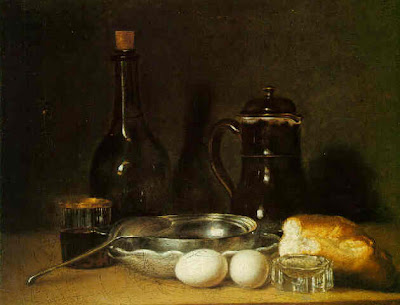
As an Art History major I've studied the works of the 17-18th century Dutch realism painters. The layers of symbolism are part of the cultural context and the artists version of "snapshots" from their period in time. Because of my former studies, the original Still Life by Henri-Horace holds as much meaning for me as the modern take-off by Marion Peck.

Robert Frank: The Americans


We spent a fair amount of time discussing the truthfulness of photography. I struggle with this kind of discussion. I understand the point that a photo can be altered both before and after it is produced but I don't look at photographs as something of solidity.


To me, a photograph is just as fleeting as the moment that is captured within it. The truth of a photograph is no different than the truth of a drawing, painting or sculpture. Each contains an element of the human who created it--whether added before or after the creation. Images are powerful. They do wield an influence but since we all filter any form of communication through our own values and experiences, I don't believe that an image can hold sway on the ultimate decisions we choose to make on any given subject.


Images from The Americans by Robert Frank.

View more info and images here.

Share/Bookmark