Showing posts with label film. Show all posts

Friday, January 21, 2011

Animation: Walt Disney Live Reference Models


Rare film footage documenting live reference modeling of classic Walt Disney animated films. Please pause the playlist in my right margin to experience the music that accompanies this delightful collection of clips and photo stills. Best viewed in 480p--just adjust the definition slider on the lower right corner of the video window and enjoy the magic!
Share/Bookmark

Thursday, November 19, 2009

reader response: chapter 6 media & life


Last week I went off an older copy of our syllabus and as a result, I read the wrong chapter in our text. That being said, I did read chapter 6, and learned a number of things about media in general, the idea and origins of "mass media", and convergence of media forms with the advent of each new technology in the 20th-21st centuries. These, then, are my reflections on chapter 6.

The more technology grows and advances, the more exposure we have to media. This can be both a good thing, and a bad thing. Today's society has a more interactive experience with visual media which involves complex interconnecting networks. A shift has happened from mass-media consumers to niche markets, also known as contemporary media.


The "masse
s" was the term created in the late-19th century which refers to the structures of society during the industrial revolution, the emergence of the working class, and how that influenced social practices. The term, Mass Media was first used in the post-WWII era. The masses can be taken as a negative connotation equating to a passive audience of non-individualized, uncritical consumers. What was/is considered as mass society reaches into both private and public realms. Large companies with corporate boards versus small, locally owned businesses resulting in less personalized service. Urbanization versus rural towns contributing to population crowding, lack of personalization, alienation, assembly-line work, and boring, repetitive, often physical ("blue collar") type jobs.


The idea of mass
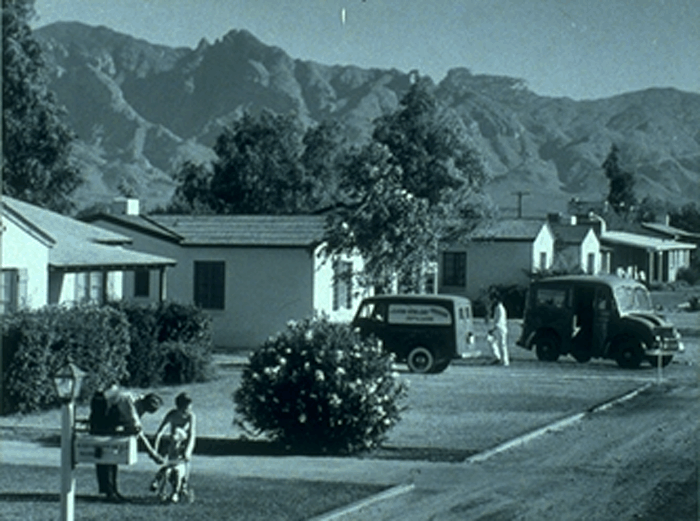
society can also be thought of as a contribution to the erosion of family life. Again, this started around the era of industrial expansion due to the migration of families from rural areas into the cities. Their pursuit was for better housing, the promise of steady work, and access to modern goods, services and entertainment. Starting in the 1950s, and continuing today, what we know as the American Suburb, can be linked to a social alienation via "cheap" entertainment--films, TV, consumerism, and modernity are all used as replacements for connectivity with other people.


Mass media in the 1920s consisted of regularly scheduled programming, from a one-way (bias) broadcast model, at a central distribution source (newspaper, radio), which fostered a less critical audience. Mass media in the 1980s up to the present decade has increased our options for information with the invention and expansions of TV, cable TV, film, mobile devices, cell phones, Internet and satellite broadcasting. Along with these expansions has come more specific media catering to interests, tastes, and language groups. In addition, today's consumer is not just interacting but also producing much of the media in mainstream, everyday life.


While seeking images to include with this post, I discovered an interesting post on this blog. The author, Anne Helen Peterson of the University of Texas, makes some great observations about the modern equivalent of Mass Society--what she calls the "Minivan Majority".

It’s hard to define the minivan majority in a sentence, so I’ll start with some descriptors. Not all of these are necessary true of everyone in the minivan majority — and if some of them describe you, that does not necessarily mean you’re in the minivan majority (and I want to make it clear that I don’t dislike or disdain the minivan majority — but it’s important to know the identity of those quietly driving taste and entertainment in the country.)

Some traits of the minivan majority:

  • You probably live in a non-urban space — either suburban or rural, but most likely suburban.
  • You are probably white.
  • You have no radical convictions. You are neither an arch conservative nor strong liberal. In other words, you are probably a self-described ‘moderate.’
  • You love pictures of babies. Especially celebrity babies.
  • You believe things that appear in print in the gossip magazines.
  • You are not overtly racist, sexist, or homophobic, but you might subconsciously discriminate against people who are different than you or the people that you know and see on an everyday basis.
  • You don’t like things that are too much: too gross, too sexual, too outrageously expensive.
  • You might own something from Ikea. You definitely own things from Target or Wal-Mart.
  • You style is a combination of Gap, Banana Republic, Ann Taylor Loft, Talbots, Coldwater Creek [and I'm adding Old Navy, Eddie Bauer, and if a Pacific NW dweller, Columbia Sportswear].
  • You are a parent.
  • You probably battle your weight, even if it’s just those pesky ten pounds.
  • You may own a minivan — or if not, a similar SUV type vehicle.
  • You believe that people of any race, color, creed or background can make something of themselves with hard work.
  • You believe in a higher power — most likely God — even if you don’t necessarily go to church every week [you are likely to make an appearance at Christmas and Easter].
  • You are not generally an early adopter — of a technology, a political candidate, a new fad, etc.
  • You enjoy the reliability of moderately price, moderate quality chain restaurants, [hotels, cars, appliances, housewares, clothing] and all-inclusive vacations.
  • You have a subscription to Cooking Light and/or may contribute recipes regularly to allrecipes.com

Swing

Good clean fun in Gap khakis.

Now, some media products favored by the minivan majority:

  • Jennifer Aniston
  • Julia Roberts
  • Tom Cruise
  • Michelle Obama
  • Celebrities who hit their career pinnacle about 10-15 years ago
  • National Treasure (and other Nicholas Cage movies)
  • Marley and Me
  • Reese Witherspoon
  • Jennifer Garner
  • Michael Buble/Josh Groban
  • Norah Jones
  • Dave Matthews Band
  • Two and a Half Men
  • Desperate Housewives
  • [Ghost Whisperer, Medium, Heroes]
  • Sex and the City (latecomers — started watching Season 3 or later)
  • Network television in general
  • Jay Leno
  • Martha Stewart and/or Rachel Ray
  • Oprah, Oprah, Oprah. Oprah’s Bookclub, Oprah’s magazine, things recommended by Oprah.
  • Entertainment Tonight, [annual music/film/TV celebrity award shows/ceremonies]
  • People especially, maybe Us magazines.
  • Nicholas Sparks novels and film adaptations
  • American Idol, Dancing with the Stars, The Bachelor/Bachelorette -- [Project Runway, America's Next Top Model, The Amazing Race, SURVIVOR, Big Brother, CSI, The Biggest Loser, Wife Swap, Extreme Makeover--any edition.]
[ ] = my additions.
Share/Bookmark

Thursday, November 12, 2009

animation: light + movement = magic


I've always been a fan of animation. I really enjoyed the section in our recent reading about the early studies of locomotion, primitive moving pictures and film animation techniques, including the creations of the Zoetrope, Praxinoscope, Phenakistoscope, and Stereoscope as precursors to the actual film projector.

As per usual, I went hunting for more information on these inventions via the Internet. These are just a few of the fascinating and beautiful examples I found...enjoy!


via YouTube.


Share/Bookmark

Sunday, October 11, 2009

persepolis: icons & ideology


In 1970s Iran, Marjane 'Marji' Statrapi watches events through her young eyes and her idealistic family of a long dream being fulfilled of the hated Shah's defeat in the Iranian Revolution of 1979. However as Marji grows up, she witnesses first hand how the new Iran, now ruled by Islamic fundamentalists, has become a repressive tyranny on its own. When she is ten years old, her world changes overnight. Girls and boys have to use different doors to enter the school. She has to cover herself with a long dark veil. Grownups around her began to disappear. Marjane had several close encounters with the country's morality police and her teachers at school. Iraqi bombs fell on the street where she lived. With Marji dangerously refusing to remain silent at this injustice, her parents send her abroad to Vienna to study for a better life. However, this change proves an equally difficult trial with the young woman finding herself in a different culture loaded with abrasive characters and profound disappointments that deeply trouble her. Even when she returns home, Marji finds that both she and homeland have changed too much and the young woman and her loving family must decide where she truly belongs.[1]
My observations of the use of icons to convey ideology in the film:


As mentioned in our text, the women and girls wearing traditional veils throughout the film underscores the idea "sameness" among the females in general. Iranian women, outside of Marjane's family, are shown as objects more than individuals, and are not respected by the Iranian men. An example, below, shows a mother traveling on the rear of a scooter behind her husband and three children. The Iranian men are almost all drawn with beards and many have sideburns.


Throughout the film a number of buildings blazoned with political propaganda murals with negative messages using icons symbolic of The United States. One shows the American flag behind a stylized Statue of Liberty, wearing the face of a skeleton. Another depicts the US flag with a giant skull and crossbones across its center in a sketchy graffiti-style.


The schoolgirls share images of The Bee Gees and ABBA, and, as a pre-teen, Marjane becomes enamoured with the band, Iron Maiden. These music groups were and are iconic of the late 1970s and early 1980s. Marjane also wears Adidas sneakers, an icon brand representative of America, and popular in the 80s era.


When Marjane flees to Vienna as a teen, she is befriended by a group of Austrian nihilists, all wear only black, smoke home-rolled cigarettes and their "leader" sports the iconic hair style of the 1980s punk youth--the Mohawk.


This story is semi-autobiographical, and at the same time it has been deemed as a historical piece. Persepolis was not favorably accepted by the Iranian government, and deemed to be a inappropriate due to parts which they felt misrepresented certain achievements that resulted from the Revolution.

The art of this film makes it well worth watching even for those not as interested in the religious or political themes. I watched the full version from which we viewed a clip in class--subscribers can watch instantly Online via Netflix. The dialogue is in French with English subtitles; it has been translated to English since the release to DVD.

Images - various sources, via Google search.

[1] "Persepolis." IDMB. 2009. IDMB.com. 11 Oct, 2009.


Share/Bookmark