Showing posts with label Robert Frank. Show all posts

Friday, November 19, 2010

Photography: Robert Frank


This week in Art History 206 we covered Postwar to Postmodern, 1945-1980. Each week we submit our personal response the work we have the strongest reaction to. I chose this photograph by Robert Franks. I feel this excerpt from our textbook lends the image much more depth:

"Frank used his work to reflect his concerns about alienation and lack of spirituality in twentieth-century America. Drug Store, Detroit is characteristic of his national portrait of emptiness, alienation, and despair. Under a barrage of bold advertising, some 15 men order, among other items, artificial orange whips, each patron seemingly unaware of the others. On the other side of the counter dutifully serving the white males are African-American women, undoubtedly working for a minimum wage. Just as the cake is trapped in the airless foreground case, the waitresses seem trapped behind the counter in the drudgery of the menial jobs. The glare of bare florescent bulbs bouncing off linoleum, Formica, and plastic is a reminder of the period's deadening aesthentic of efficiency and modernity, while the monotonous lineup of jukeboxes on the counter opposite the patrons underlines the "sell, sell, sell" mentality of American business. It should come as no surprise that the downtown Detroit where this photograph was taken was largely destroyed during the race riots of the late 1960s." (Janson's History of Art, 8th Ed.)

Image - Drugstore, Detroit, 1955, © Robert Frank, from The Americans
Image Source - DIA (Detroit Institute of Photography) Blog


Share/Bookmark

Thursday, October 1, 2009

reader response: representation and truth


Weegee and Emmett Till

The image by Weegee, The First Murder {of which the actual title is Their First Murder} is more powerful to me than viewing the murder victim. Note in the version I have posted that there are two people shown on the right that were cropped from the version in our book.

As we discussed in class, the Punctum is strong and the different faces and emotions within do grab my attention. That he chose to render his subject in the high contrasts of black and white lends an even stronger atmosphere to this photograph. I found it interesting that I feel more emotion when I view this photograph than the infamous shot of Emmett Till in his casket. As a side note, I was impressed with Weegee's innovative mobile darkroom in the trunk of his Chevy!

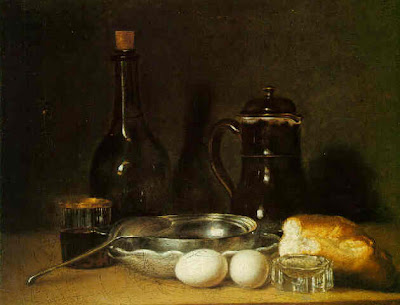
Henri-Horace Roland de la Porte: more still life works


As an Art History major I've studied the works of the 17-18th century Dutch realism painters. The layers of symbolism are part of the cultural context and the artists version of "snapshots" from their period in time. Because of my former studies, the original Still Life by Henri-Horace holds as much meaning for me as the modern take-off by Marion Peck.

Robert Frank: The Americans


We spent a fair amount of time discussing the truthfulness of photography. I struggle with this kind of discussion. I understand the point that a photo can be altered both before and after it is produced but I don't look at photographs as something of solidity.


To me, a photograph is just as fleeting as the moment that is captured within it. The truth of a photograph is no different than the truth of a drawing, painting or sculpture. Each contains an element of the human who created it--whether added before or after the creation. Images are powerful. They do wield an influence but since we all filter any form of communication through our own values and experiences, I don't believe that an image can hold sway on the ultimate decisions we choose to make on any given subject.


Images from The Americans by Robert Frank.

View more info and images here.

Share/Bookmark